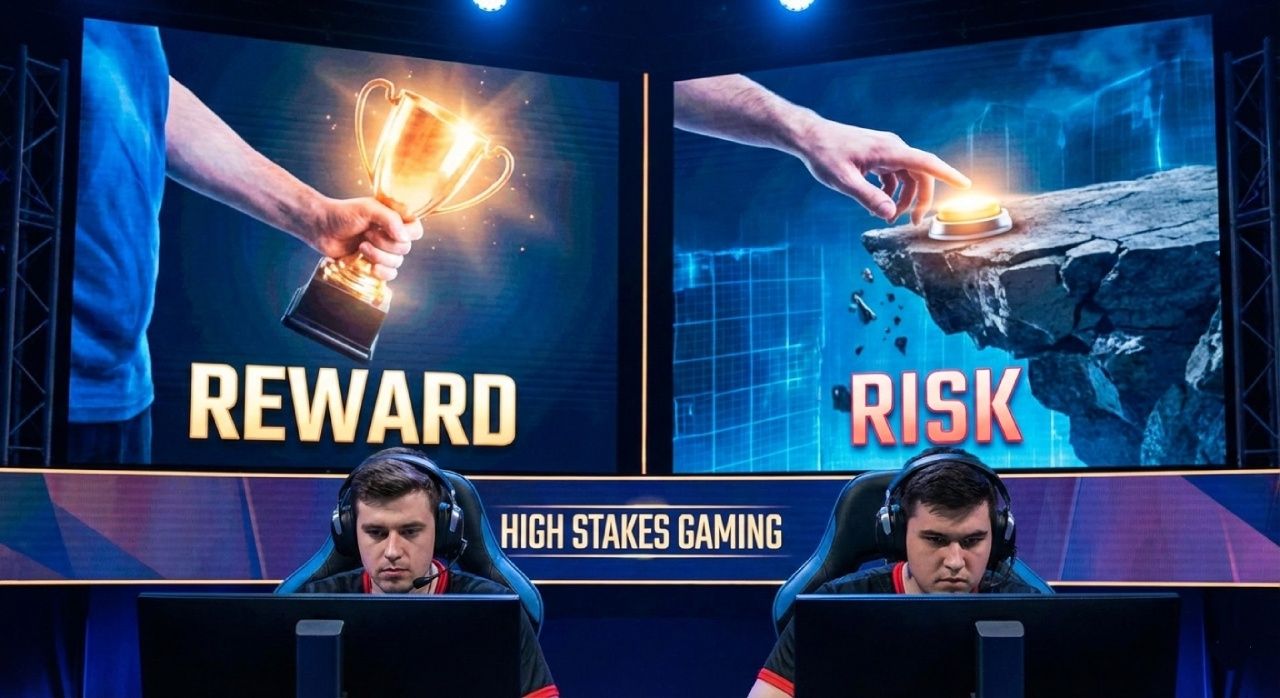
The Psychology of Risk vs Reward in Competitive Gaming

One of the core tenets of competitive gaming is the constant risk vs. reward analysis players conduct throughout the game. Almost every decision they make carries potential upside and downside, from banal ones like going left or right to more profound choices like deciding the correct strategy for the match. Over time, this mental calculus becomes second nature, shaping how players perform in-game and also how they approach not just gaming, but other aspects of life as well.
Understanding this psychology helps explain why behaviors like smurfing exist, why players sometimes play overly safe, and why others chase high-risk strategies despite inconsistent results.
Ranking Systems and the Weight of Consequences
Most competitive games have various systems in place designed to rank players and motivate them to advance. Whether they use Elo, MMR, divisions, or tiers, the purpose is the same: to turn performance into measurable status. While this approach fuels engagement, it also increases aversion to loss, and therein lies the crux of the problem.
Basic human psychology states that we perceive rank loss far more acutely than rank gain. Or, in other words, rank losses are more painful than rank gains are satisfying. Even a single defeat, statistically insignificant over a longer time period, may burn us and make us feel we have wasted time and effort. This emotional response leads many players to adopt conservative approaches, prioritizing short-term rank protection over long-term improvement. As a result, players often avoid unfamiliar roles, maps, or strategies once they reach a rank they value, even if experimentation could help them grow.
Smurfing and Reduced Psychological Risk
Smurfing, on the other hand, significantly alters how we perceive risk. If you are playing on an alternate account, the consequences of losing seem far less dire. There is no risk of jeopardizing the level of your main account or the pressure to level up.
With that psychological pressure eliminated, players are more inclined to experiment with bold strategies or play unfamiliar characters. In many cases, smurfing becomes a sandbox for experimentation, allowing players to learn without the emotional burden that comes with high-stakes ranked play.
While there are other aspects of smurfing that make it highly controversial, there is no denying that playing on smurf accounts dramatically changes how players approach the game.
Why Competitive Gamers Think This Way
Competitive gaming trains players to think in terms of probability. Since success is rarely guaranteed and outcomes are often influenced by variables outside individual control, it is important to understand that improvement and advancement come from managing this uncertainty rather than eliminating it.
Hence, players instinctively learn to constantly ask questions like: what is the downside if this fails, is the potential upside worth the risk, and can I test this without long-term consequences? They commit to action only if they are satisfied with the answers.
Risk Assessment Beyond Gaming
For many players, risk assessment becomes almost a rule that also applies to other aspects of life as well, especially when engaging with other online platforms. They also have the advantage of quickly assessing these systems, as they have been doing it for years.
This is why trial-based models are so popular with gaming audiences. Things like free access, limited trials, or low-commitment entry points align perfectly with the gamer’s instinct to test before buying. This allows them to test the platform without any risk, and they try to take advantage of it whenever possible, regardless of whether we are talking about gaming, iGaming, or something else. For instance, crypto casinos offering no deposit bonuses are very attractive to gamers who enjoy the occasional slot spin or a quick poker game. As these bonuses let them try the casino in question without risking their own money, they align perfectly with their risk-avoidance strategies. Of course, they first consult sites like CCN to see whether the casino in question is even worth their time.
Conclusion
Risk versus reward is not just a gameplay mechanic. It is a mindset trained and reinforced by competitive environments of modern online gaming. Things like ranking systems, visible progression, and community pressure all heighten emotional responses to loss and reward, while smurfing, experimentation, and low-commitment entry points emerge as natural responses to these pressures. Understanding this important psychological mechanism can help gamers make more deliberate choices, balancing caution with growth and recognizing when fear of loss is limiting progress.