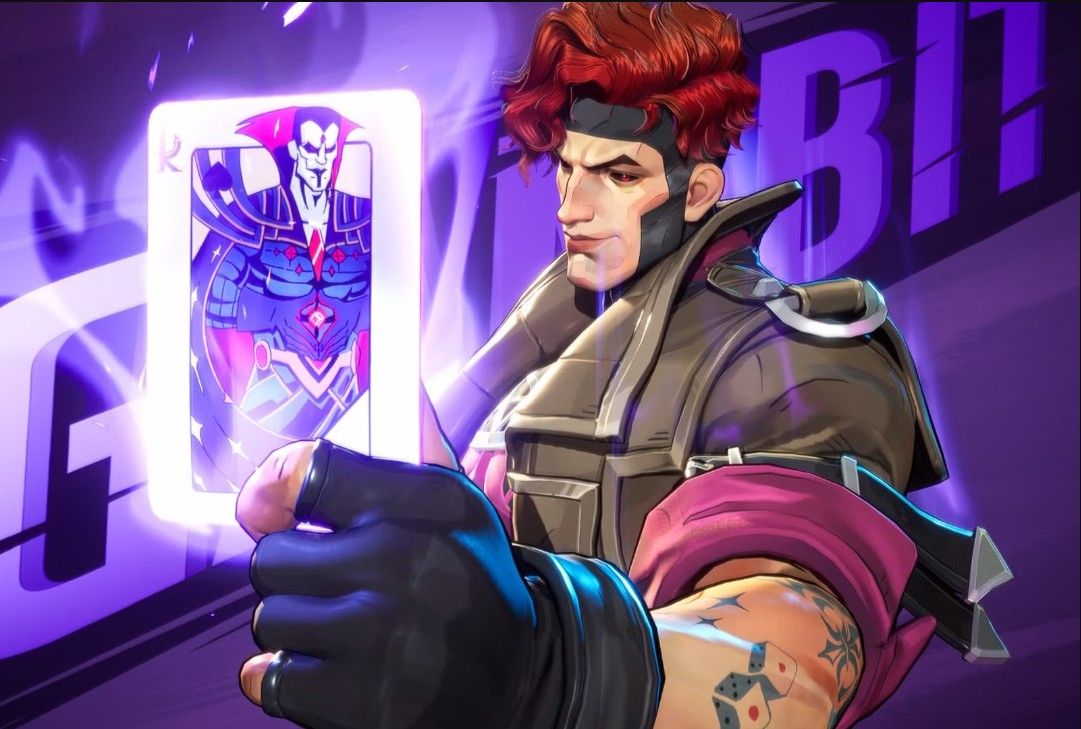
How to Counter Gambit in Marvel Rivals: Picks, Positioning, and Teamplay

Gambit sits around a 52.6% win rate in Marvel Rivals, and the part that frustrates players is not his damage, it’s how often he deletes your best moment with a well-timed cleanse. If you want consistent wins into him, you need to treat Ace of Hearts like a “fight veto,” then build your positioning, cooldown tracking, and re-engage timing around forcing it early.
Why Gambit Feels Hard to Play Against
Gambit’s role as a Strategist is to keep fights winnable for longer than they should be. As a support hero, he turns one clean pick or one crowd control ultimate ability from your team into a reset, then swings the next 5 seconds with burst healing and anti-heal pressure.
Coordinated teams amplify him because his value is timing-based. In solo queue, Gambit players often waste Hearts too early or dash without a plan, but in stacks he gets peel on demand and his cleanse lands exactly when your engage is supposed to win.
His reputation as S+ tier in Season 5 is win-rate-driven, but it’s also matchup-dependent. He looks unstoppable into CC-heavy comps that rely on one big ultimate trade, yet he can feel fragile into teams that pressure from multiple angles and force him to spend resources defensively.
What you’re actually trying to stop is not “healing in general.” You’re trying to stop cleanse timing, short burst healing windows that stabilize a focused target, and the anti-heal that makes your frontline feel unhealable at the worst moment.
The Core Problem: Cleanse + Burst Healing + Anti-Heal
Gambit’s kit can erase crowd control value by cleansing at key moments. That changes how you should engage, because the usual “land CC, delete target” flow breaks if the CC is removed on reaction.
He can also swing fights with a short, high-impact healing window while applying anti-heal to your frontline. The result is a tempo flip: your team commits, your tank can’t be topped off, and Gambit’s team survives long enough to counter-push.
Common Situations Where Gambit Takes Over
Objective brawls are his comfort zone because teams stack tightly and his Kinetic Cards can clip multiple allies. When you clump, he gets multi-target value without taking risks.
Ultimate trades are where he steals games. Your Doctor Strange or Scarlet Witch crowd control ultimate gets cleansed, you lose tempo, and the next fight starts with your best tools missing while his 4-charge system rebuilds.
Know Gambit’s Kit So You Can Punish It
If you cannot describe Gambit’s next 3 seconds, you cannot counter him reliably. His power is rhythmic: the 4-charge system telegraphs when a high-impact play is coming, and your job is to force the “good charge” out on a bad moment.
Most Gambit decision-making boils down to two modes. Hearts is healing and debuff cleansing, while Spades is damage and anti-heal pressure that makes your support line feel late.
Use one simple counter rule that works in ranked and scrims: force cleanse early, then re-engage before it’s back. If you only do one thing from this guide, do that.
Sleight of Hand and the 4-Charge Cycle
Track Sleight of Hand like a cooldown, not like “random cards.” After a big save, he is temporarily less threatening because his next options are narrower and his rotation is partially spent.
Baiting a charge is often better than hard committing into it. A soft engage that draws Ace of Hearts is worth more than a desperate all-in that gets erased and hands him an easy counterfight.
Ace of Hearts: The Cleanse Window You Must Respect
Treat Ace of Hearts as a counter-ultimate, because that’s how it functions in real games. If your comp relies on one big crowd control moment, Gambit’s cleanse is the direct answer.
Plan layered CC so one cleanse cannot remove everything of value. Stagger effects so you still get a displacement, a slow, or a second CC after the cleanse is forced, rather than stacking all your win condition into a single button press.
Cajun Charge Mobility and Escape Routes
Cajun Charge is the difference between “free backline kill” and “wasted dive.” Gambit is punishable when his dash is down, so call a re-peek or re-dive timing the moment you see him spend it.
Control angles so his dash does not reset him to safety for free. If his escape always goes back to his frontline, you are not cutting off retreat paths, you are just chasing.
Counter Plan in 3 Steps (Works in Solo Queue and Stacks)
You do not need perfect counter picks to beat Gambit. You need a repeatable plan that denies his easiest value, forces resource trades, then ends the fight before his rotation resets.
The three steps are simple: deny isolation picks, force dash and cleanse with low-commit pressure, then win with a second wave engage. This is team coordination you can execute with two players even in solo queue.
Step 1: Positioning Rules That Reduce His Value
Avoid clumping, but do not scatter into 1v1s. Spread just enough to reduce multi-target card value while staying within peel distance and line-of-sight to protect the first person he anti-heals.
Hold cover and off-angles to break his consistent card lines. If Gambit has a clean lane to both heal his tank and tag your frontline with Spades, he gets to play “no-risk support,” which is when he feels oppressive.
Step 2: Bait Cleanse and Dash Without Overcommitting
Use soft CC, poke bursts, or the threat of a dive to draw out Ace of Hearts. The goal is to make him think “I must cleanse now” when you have not truly committed your ultimate ability yet.
Run a fake engage: step in, show damage, force the reaction, then disengage quickly. Re-hit once cleanse is down, because Gambit without a cleanse window is just a support hero with limited answers to layered pressure.
Step 3: Re-Engage Timing (The 6–10 Second Rule of Thumb)
After he spends a major defensive tool, re-engage before he can rebuild a full rotation. In practice, that window is often 6 to 10 seconds where his best save is gone and his team is still playing forward like it exists.
Call targets clearly. If Gambit is reachable, prioritize him first, and if he is not reachable, delete the partner he’s enabling with burst healing and cleanse support.
Best Counter Picks and Why They Work
A “counter” does not always mean you kill Gambit first. Sometimes it means you deny his value, disrupt his support line, or force him to play defensively so he can’t enable aggressive ultimate trades.
Matchup data and ranked experience tend to converge on a few problems for Gambit. Ultron is a standout check, and Invisible Woman and Venom also create consistent pressure that breaks his preferred rhythm.
Ultron: The Most Reliable Gambit Check
Ultron pressures Gambit in a way that is hard to cleanse away. The key is consistency: if Gambit is constantly managing his own safety and line-of-sight, he stops freely cycling Hearts and Spades into his frontline.
Data-backed matchup notes commonly show Ultron as Gambit’s toughest counter, with Gambit’s win rate dropping sharply in that pairing. One dataset puts Ultron at roughly a 37.8% win rate versus Gambit from Gambit’s perspective, which matches what it feels like in ranked when Ultron controls the fight’s pace.
Frame the win condition clearly: force Gambit to spend cleanse defensively instead of enabling aggressive ultimate trades. If Ace of Hearts is used to save Gambit or a backliner from pressure, your next engage becomes much cleaner.
Invisible Woman: Deny Value and Break Setups
Invisible Woman can blunt Gambit’s swing turns by denying clean follow-up and reducing how often his team converts anti-heal into a kill. When she protects the first target Gambit wants to anti-heal and collapse, his Spades pressure loses its payoff.
Her utility also disrupts setups that Gambit wants for objective fight stability. If your team can survive the first burst healing window without panicking, Gambit’s “save” becomes a stall instead of a flip.
Venom: Collapse and Punish His Escape Timing
Venom turns the matchup into a positioning test. He threatens backline access and forces Gambit to dash early, which is exactly what you want if your plan is “bait dash, then re-dive.”
The punish is about angles, not raw chase speed. Cut off retreat paths, take the space Gambit needs to maintain line-of-sight, and re-engage right after Cajun Charge is used instead of trying to finish through it.
Teamfight Tactics: How to Beat Cleanse and Anti-Heal
The cleanest teamfight pattern into Gambit is layered pressure: poke to force cleanse, then commit with ultimates. If you only hard engage once per fight, Gambit’s kit is designed to beat you.
Do not stack all crowd control into one moment. Stagger it so your second wave still has teeth after debuff cleansing hits, and so your target priority calls do not collapse when the first CC disappears.
Assign responsibilities even in solo queue. One player tracks Gambit tools, and one player calls re-engage timing, because “cleanse down” is only useful if your team acts on it.
Layering CC So Cleanse Can’t Nullify Your Engage
Open with a lower-cost CC or displacement, then follow with the fight-winning ultimate after cleanse. You are not trying to “trick” Gambit, you are trying to make his best button trade into your least important one.
If you must hard engage first, keep one CC ultimate in reserve as a second wave. Doctor Strange and Scarlet Witch comps often fail into Gambit because they commit everything at once, then have no follow-up when Ace of Hearts removes the payoff.
Playing Around Spades Anti-Heal
When anti-heal lands, stop expecting panic healing to fix it. Switch to cover, peel, and mitigation until it expires, because raw healing throughput is exactly what Gambit is trying to invalidate.
Rotate defensive cooldowns instead of relying on healing numbers. Shields, damage reduction, mobility, and breaking line-of-sight keep your frontline alive long enough to re-take space after the anti-heal window ends.
Vision and Angle Control
Vision control is the quiet counter to Gambit. Hold off-angles so he must choose between healing line-of-sight and personal safety, because he cannot do both if you split the fight.
Use flank checks so he cannot free-cast from behind his frontline. If Gambit is never threatened, he will always have the time to pick the perfect cleanse timing.
If you want a deeper team macro layer, pair this with your shotcalling structure from your ranked teamfight fundamentals guide. It helps teams turn “cleanse used” into an actual win instead of a nice observation.
Map and Objective Play: Where Gambit Is Strong (and How to Flip It)
Gambit thrives in tight corridors and stacked objectives because his cards get easy multi-target value. Your goal is to widen the fight so he has to choose who to save.
Control high ground and side lanes to split his attention and reduce the value of Hearts. If Gambit is rotating or repositioning, he is not cleansing, and supports lose value when they’re late.
Force him to rotate repeatedly. Even a strong support hero becomes ordinary when they are constantly moving and losing line-of-sight.
Corridors and Chokes
Do not take repeated 5v5s in the same choke points. Rotate and re-approach from two angles so Gambit cannot cover every lane with the same card line.
Use cover to break Kinetic Cards lines and force him to step forward. When Gambit has to expose himself to maintain healing, your team finally gets a real punish window.
Point Holds and Payload-Style Brawls
Split your formation: one anchor on objective, one pressure group on a side angle. This forces Gambit to pick between stabilizing the point player and answering the side threat.
Time dives when he’s forced to expose himself to maintain healing. If he wants to keep the payload brawl stable, he often has to show himself for line-of-sight, and that is when focus fire actually reaches him.
Examples: Two Practical Fight Scripts
These scripts are designed to be copied in ranked with minimal coordination. They show what “bait cleanse” looks like in real time, and how to punish after dash or cleanse is used.
Use them as defaults, then adapt based on matchups and map geometry. The point is to make your timing predictable for your team and unpredictable for Gambit.
Script 1: Soft Engage to Force Ace of Hearts, Then Full Commit
Start with poke plus a minor CC threat on the frontline, ideally on the target Gambit is already healing. Show enough damage that Gambit feels he must cleanse, then back off as soon as Ace of Hearts is used.
Re-engage with your main ultimate ability and focus the same target before Gambit resets his 4-charge cycle. If the target lives for free, you probably swapped target priority mid-fight and gave Gambit time to rebuild.
Script 2: Backline Collapse After Cajun Charge
Pressure Gambit until he uses Cajun Charge, even if you do not secure damage. The moment he dashes, take the angle that cuts his retreat, because the second dive is where the kill usually happens.
Swap target priority if he becomes unreachable. Delete the ally he’s trying to enable, then turn back to Gambit when he is forced to re-peek for line-of-sight healing.
If your team struggles to coordinate collapses, it helps to standardize simple callouts like “dash used” and “cleanse used.” A short comms structure from your cooldown tracking checklist can clean this up fast.
Common Mistakes When Trying to Counter Gambit
Most teams do not lose to Gambit because he is unkillable. They lose because they donate value: ultimates into cleanse, clumped formations, and tunnel vision that ignores the real damage dealer he’s enabling.
Fixing these mistakes usually adds more win rate than swapping heroes. It also makes your play more consistent across different matchups, not just this one.
Mistake: Treating Cleanse Like a Normal Heal
Cleanse changes the rules of ultimate trading, so plan for it explicitly. If you treat Ace of Hearts like “healing,” you will keep committing CC ultimates into a button designed to erase them.
If you do not track it, you will misread why your engage failed. Your team will think the problem was damage, when the real issue was that your only crowd control moment got debuff cleansing on reaction.
Mistake: Diving Alone
Solo dives are easy to stall and punish. Go in pairs with a clear exit plan, because Gambit’s burst healing window is built to keep a target alive long enough for the counter-peel to arrive.
If your comp cannot dive, win by angles and attrition instead. Off-angles, line-of-sight breaks, and disciplined re-peeks create the same resource drain without feeding.
FAQ
Who counters Gambit in Marvel Rivals?
Heroes that pressure him consistently or disrupt his support line tend to perform best as counter picks. Matchup data often points to Ultron as a top counter, with Invisible Woman and Venom also performing well into him when they force early Cajun Charge and punish re-peeks.
Who can defeat Gambit?
Teams beat Gambit by forcing his cleanse early, spacing to reduce multi-target Hearts value, and re-engaging before he rebuilds his Hearts/Spades rotation. The most reliable pattern is collapsing with two players and coordinated peel, not solo hero plays.
What makes Gambit OP in Marvel Rivals?
His strength comes from fight-swinging utility: elite cleanse timing, burst healing that stabilizes a focused target, and Spades anti-heal that denies your frontline’s sustain. That mix flips objective fight tempo and makes crowd control ultimates from heroes like Doctor Strange and Scarlet Witch far less reliable.
How do you counter the King’s Gambit?
In Marvel Rivals, the practical counter is to treat Gambit’s cleanse like a win condition you must bait. Use low-commit pressure to draw Ace of Hearts, then commit your real engage after it’s used, ideally within a 6 to 10 second re-engage window before his rotation resets.