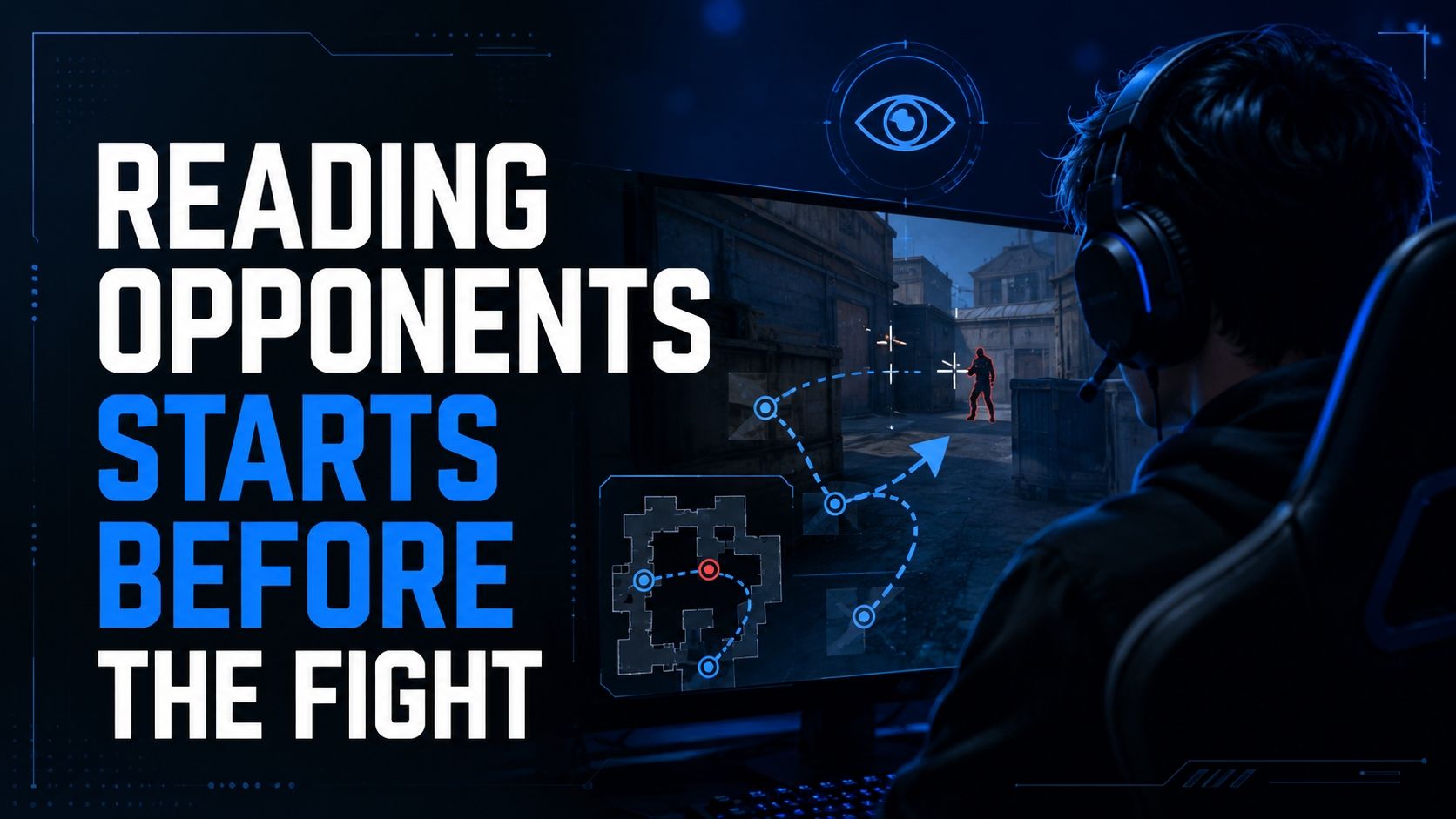
Reading Enemy Intentions Is the Skill Behind Every Outplay
The best outplays begin when a player notices a small change before everyone else does. A laner walks up without minion cover. A support disappears from vision after the wave crashes. A duelist holds an angle longer than usual. The visible action is simple, but the hidden message reveals far more than you might think.
That is why reading opponents in games is more than instinct. It is a mix of attention, memory, and timing. Ranked players feel those demands whenever a fight forms around incomplete information.
Pattern Recognition Travels Across Games
The same reading habit appears in any competitive setting where players act before all information is visible. In League of Legends, a mid laner stepping into fog after pushing can suggest a roam, a warding trip, or a bait for jungle pressure. In a hero shooter, a tank holding space without spending a key cooldown can suggest that the real threat is arriving from another angle.
In poker, the signals are different, but the mental work is familiar: timing, position, restraint, repeated choices, and pressure all shape the next decision. That is why poker online fits naturally as an example of reading intent through limited information. The above page presents an online poker environment with formats including cash games, Zone Poker, Sit & Go’s, and multi-table tournaments.
A player exploring poker online can observe how position, pacing, and hand selection create readable patterns, just as a gamer studies movement, cooldowns, spacing, and rotations across repeated fights.
Movement Becomes Information
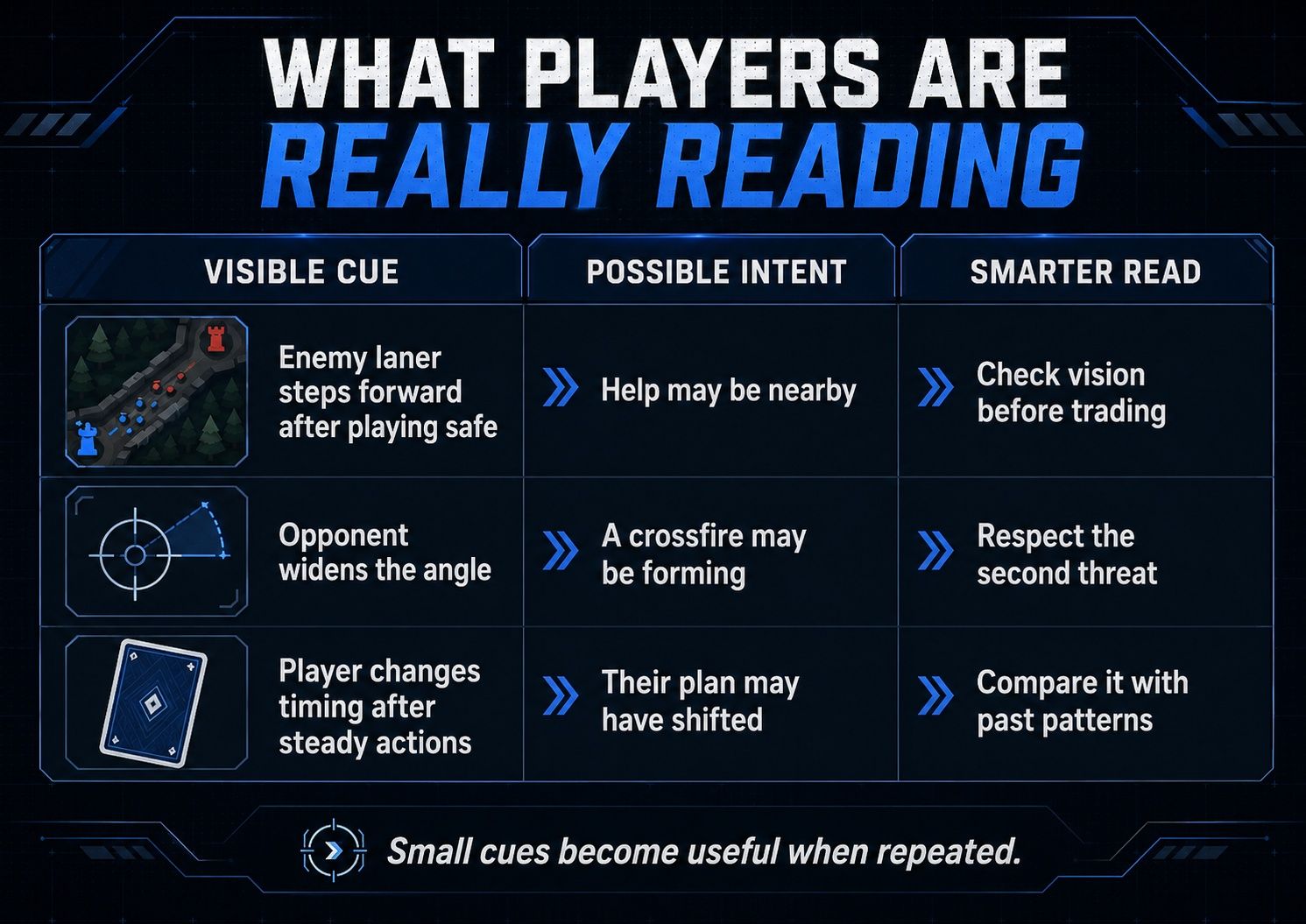
Enemy movement is not random noise. It is often the first readable layer of intent. A jungler who appears top once could just be a coincidence, but a jungler appearing top whenever dragon is unavailable is a pattern you can learn and utilize. A bot lane that stops contesting the wave may be waiting for help. A support who vanishes at the predictable intervals may be building a roam habit.
This is where average players and stronger players separate. Average players react to the observed event: the gank, the dive, the flank, the all-in. Stronger players identify patterns and start anticipating enemy behaviors.
None of this means every read is certain. The point is not mind-reading. The point is reducing surprises. When a player reads movement well, the enemy has fewer ways to create panic. Even if you cannot disrupt the plan after identifying it, your response will be calmer because the threat was anticipated ahead of time.
Cooldowns Make Intent Honest
Cooldowns tell the truth because they limit what a player can actually do. A champion without Flash cannot threaten the same engage path. A duelist without mobility can still posture, but the exit is weaker. A tank without a key initiation tool may hold space, yet the follow-up is easier to measure.
This is why cooldown tracking is not just a mechanical habit. It changes how enemy intention should be interpreted. If an opponent walks forward with every tool available, the movement carries one meaning. If they walk forward without their escape, the same movement carries another. They may be baiting, overconfident, or relying on unseen help.
Good readers compare the visible cue with the available options. Health bars matter, but actions matter more. A low-health enemy with mobility can still pull a chase into danger. A healthier opponent who has spent everything may be the cleaner target. The read gets stronger when movement, cooldowns, vision, and map timing point together.
The Best Read Still Needs Discipline
The hard part is not always seeing the clue. Often, it is respecting it. Players often ignore good reads because the target looks low, the fight looks exciting, or the last mistake made them impatient. They know the jungler could be nearby and trade anyway. They sense the flank and keep walking forward.
A useful read should change behavior. Sometimes, that means holding a spell, giving up a wave, pinging earlier, or refusing a fight with no clean exit. Outplays become repeatable when good predictions are paired with restraint, not just confidence.
Great players are not seeing the future. They are seeing constraints earlier: where the opponent can move, which tools are missing, what pattern has repeated, and what pressure may do next. Once players watch games through that lens, outplays look less like miracles and more like disciplined attention.
The Read Becomes Stronger Over Time
Opponent reading improves when players treat every match as evidence. One missed cue is not failure. It is a note for the next fight. Over time, repeated lane movements, delayed cooldowns, and awkward spacing become easier to recognize. The real advantage is not predicting everything. It is entering fights with fewer surprises, clearer choices, and enough discipline to act on what the game has already shown.